


 EN
EN



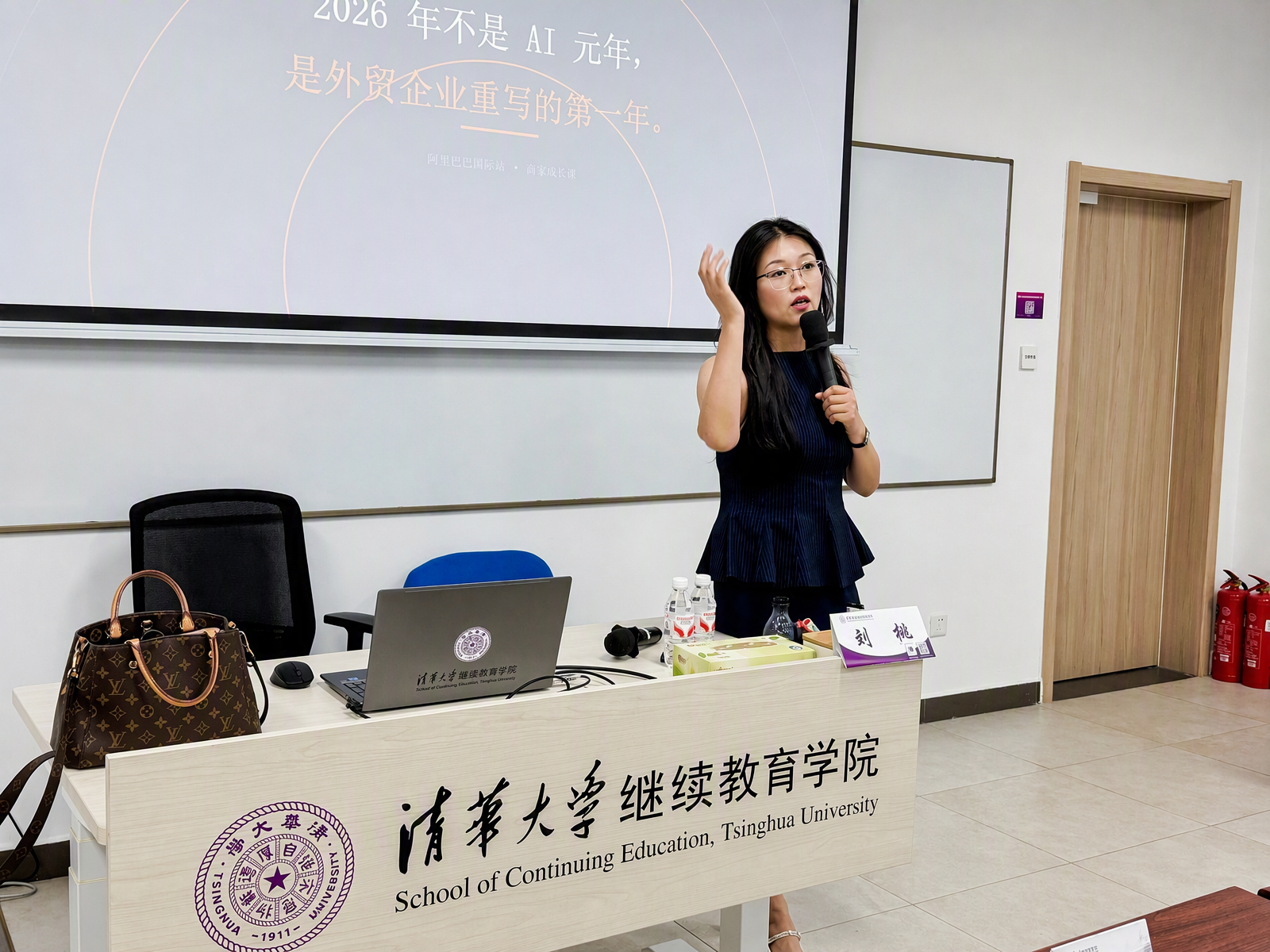
In a recent masterclass at Tsinghua University, Karen Liu — General Manager of Beijing JONTELASER Technology Co., Ltd., a leading Chinese manufacturer of medical aesthetic devices — delivered a blunt warning to SME exporters: the AI efficiency window for cross-border trade may last only about half a year once every competitor runs the same tools. AI-driven visitor leads convert at significantly higher rates than traditional sales inquiries, but the advantage is real only for companies that adopt early, apply AI systematically, and transform how their organization thinks and works.
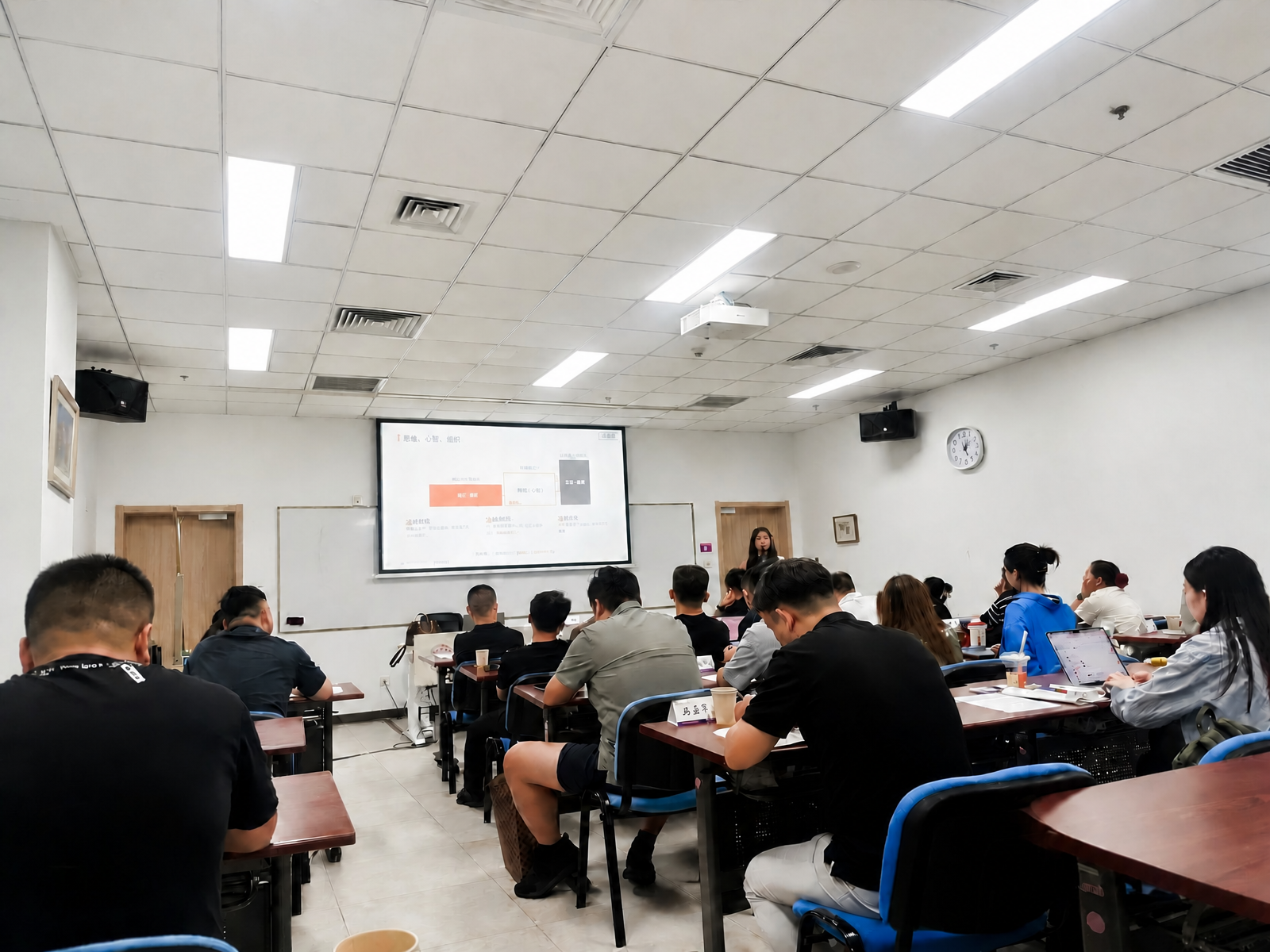
1. A Watershed for Chinese Exporters
The session opened with a slide titled "Watershed" (分水岭), framing the current moment as a genuine turning point for China's export industry. Liu's message was direct: "2024 was not the inaugural year of AI — it was the first year foreign trade enterprises rewrote themselves." In her view, AI has moved from a productivity experiment to a competitive necessity for any exporter that wants to win inquiries, shorten sales cycles, and protect margins in an increasingly crowded B2B market.
2. Who Is Karen Liu?
Karen Liu is the General Manager of Beijing JONTELASER Technology Co., Ltd., a medical aesthetic device manufacturer founded in 2004 that exports to more than 50 countries under the JONTELASER and JT MED brands. As both an experienced exporter and an early adopter of AI across B2B sales, she was invited by Tsinghua University's School of Continuing Education to share practical, field-tested methods with SME foreign trade owners — a rare combination of academic platform and hands-on export experience.
3. Three Pillars of the Masterclass
Pillar 1 — Using AI to Run the Full Cross-Border Chain Liu demonstrated how AI can be applied end-to-end, from market research and product selection to content creation, listing optimization, inquiry handling, customer follow-up, quotation, and even logistics coordination. Her argument: AI is not a single tool but a chain of capabilities, and exporters win by connecting them into one workflow rather than using AI in isolated steps.
Pillar 2 — Using AI to Do Foreign Trade Beyond generic chatbot use, Liu showed practical applications for B2B sales: generating multilingual product content, building buyer profiles from inquiry data, drafting professional quotations and negotiation scripts, automating follow-up sequences, and personalizing communication with distributors in different regions — turning raw leads into qualified opportunities with far less manual effort.
Pillar 3 — Enterprise AI: Thinking, Mindset, Organization Perhaps the most distinctive part of the lecture was her framework "Thinking, Mindset, Organization" (思维、心智、组织), illustrated with a training-versus-coaching diagram. Her point: tools can be learned in a training session, but companies that sustain an AI advantage invest in coaching — embedding AI into daily habits, management routines, and team structure. Technology is the easy part; the organization is the real transformation.
4. Key Insights and Quotes from the Session
- "2026 was not the inaugural year of AI — it was the first year foreign trade enterprises rewrote themselves."
- "Once everyone can run the cross-border chain with AI, the window for efficiency gains may last only about half a year."
- "AI visitor conversion rates are significantly higher than traditional business opportunities."
- "The dividend is real, but it will be quickly consumed by homogenization."
5. What This Means for International Buyers
For overseas distributors, clinic chains, and medical aesthetic professionals sourcing equipment from China, an AI-driven supplier is not just a marketing story — it changes the buying experience. AI-augmented exporters respond to inquiries faster, deliver more accurate quotations, provide consistent multilingual documentation, and follow up with the discipline of a much larger team. JONTELASER applies these methods internally, which is why the company can serve partners across the Middle East, Europe, Southeast Asia, and the Americas with speed and precision — and why its CEO is now teaching other exporters to do the same.
6. About Beijing JONTELASER Technology Co., Ltd.
Beijing JONTELASER Technology Co., Ltd. has designed and manufactured professional medical aesthetic devices since 2004. Under its premium sub-brand JT MED, the company offers a full portfolio of body sculpting, laser, HIFU, RF microneedling, and skin care platforms, with ISO 13485 quality management and compliance aligned to international standards including FDA, CE, and TGA. The company supports partners in more than 50 countries with training, marketing resources, and OEM/ODM services.
FAQ
Q: How can small and medium-sized enterprises use AI for foreign trade? A: SMEs can apply AI across the entire cross-border chain — market research, product selection, multilingual content creation, listing optimization, inquiry handling, quotation drafting, and automated follow-up — connecting these steps into a single AI-augmented workflow instead of using tools in isolation.
Q: What is the "AI efficiency window" in cross-border trade? A: It refers to the limited period during which early adopters capture outsized conversion gains before AI tools become standardized across the industry. Karen Liu estimates this window may last only about half a year, after which the efficiency dividend is consumed by homogenization.
Q: Why did a medical device company CEO teach at Tsinghua University? A: Karen Liu was invited as a practicing exporter who has integrated AI into a real B2B export business. Tsinghua's School of Continuing Education brings industry practitioners to teach SME owners practical, field-tested methods for cross-border e-commerce and AI adoption.
Q: How does JONTELASER use AI in its own export business? A: JONTELASER applies AI across market intelligence, multilingual marketing content, buyer profiling, and sales follow-up to respond faster and more accurately to international partners — the same methods Karen Liu teaches at Tsinghua.