


 EN
EN



Microwave Therapy for Body Contouring: Clinical Mechanism, Treatment Protocol & Safety Guide
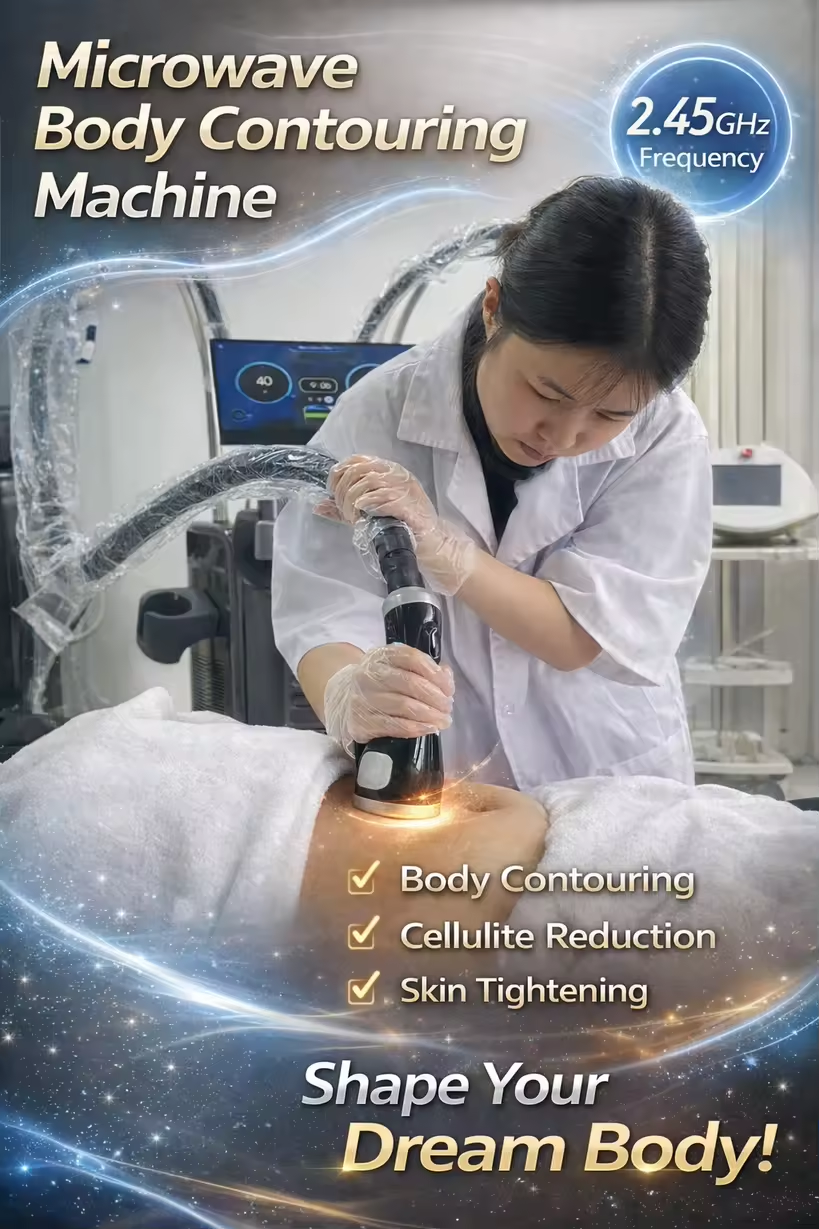
What is the clinical mechanism of microwave body contouring? Microwave energy penetrates to subcutaneous depth and produces volumetric heating through dielectric heating of tissue water, delivering a dual clinical effect: thermal stress on adipocytes and collagen denaturation with subsequent remodeling.
Which patients are clinically suitable? Patients with localized, pinchable subcutaneous fat, with or without skin laxity or cellulite appearance, who are close to a stable weight. It is a contouring modality, not an obesity treatment.
What does a typical treatment protocol look like? Most clinical protocols use a course of sessions spaced one to several weeks apart, with parameters individualized by treatment area, fat thickness, and patient tolerance. Maintenance sessions sustain the result.
When do clinical results become visible? Fat clearance and collagen remodeling are gradual biological processes. Improvement typically develops over weeks to months after a course, which is why follow-up assessment points matter more than immediate photography.
Is Coolwave microwave therapy safe in clinical practice? It is a non-invasive, no-downtime modality. Transient erythema and a warming sensation are expected; standard contraindications (implanted electronic devices, metal implants in the treatment area, pregnancy) require screening before treatment.
Clinical Mechanism: Volumetric Heating of Adipose and Collagen Tissue
Microwave body contouring is a thermal modality. Its clinical behaviour differs from surface-focused technologies because energy is delivered volumetrically rather than being concentrated at the skin surface.
- Dielectric heating. Microwave energy causes polar water molecules in tissue to rotate rapidly in an alternating electromagnetic field, converting electromagnetic energy into heat distributed throughout the treated volume.
- Depth of action. Because heating is volumetric, therapeutic energy reaches the subcutaneous fat layer and the dermis together, rather than being attenuated at the surface. It is also not governed by the tissue-impedance behaviour that limits some contact heating modalities.
- Dual tissue target. The clinical consequence is a two-compartment effect: controlled thermal stress on adipose tissue, and thermal denaturation of dermal collagen followed by remodeling.
- Surface management. Modern systems manage superficial temperature while delivering therapeutic energy at depth - a design balance that determines both comfort and the safety margin of the treatment.
Biological Sequence After a Session
- Thermal stress. Adipocytes in the treated volume experience controlled heat stress beyond their tolerance threshold for cellular homeostasis.
- Cellular response. Affected fat cells undergo apoptotic signalling rather than immediate necrosis - a controlled, gradual process.
- Clearance. The body's inflammatory and lymphatic response clears affected cells over the following weeks.
- Collagen remodeling. Thermally denatured collagen contracts initially, then is replaced and reorganized by fibroblast activity over subsequent weeks, improving firmness and skin texture.
Note on clinical honesty: the exact magnitude of each response varies between patients and depends on treatment parameters, area, and fat thickness. Clinicians should set expectations around a gradual, multi-session course rather than a single-session outcome.
Clinical Indications
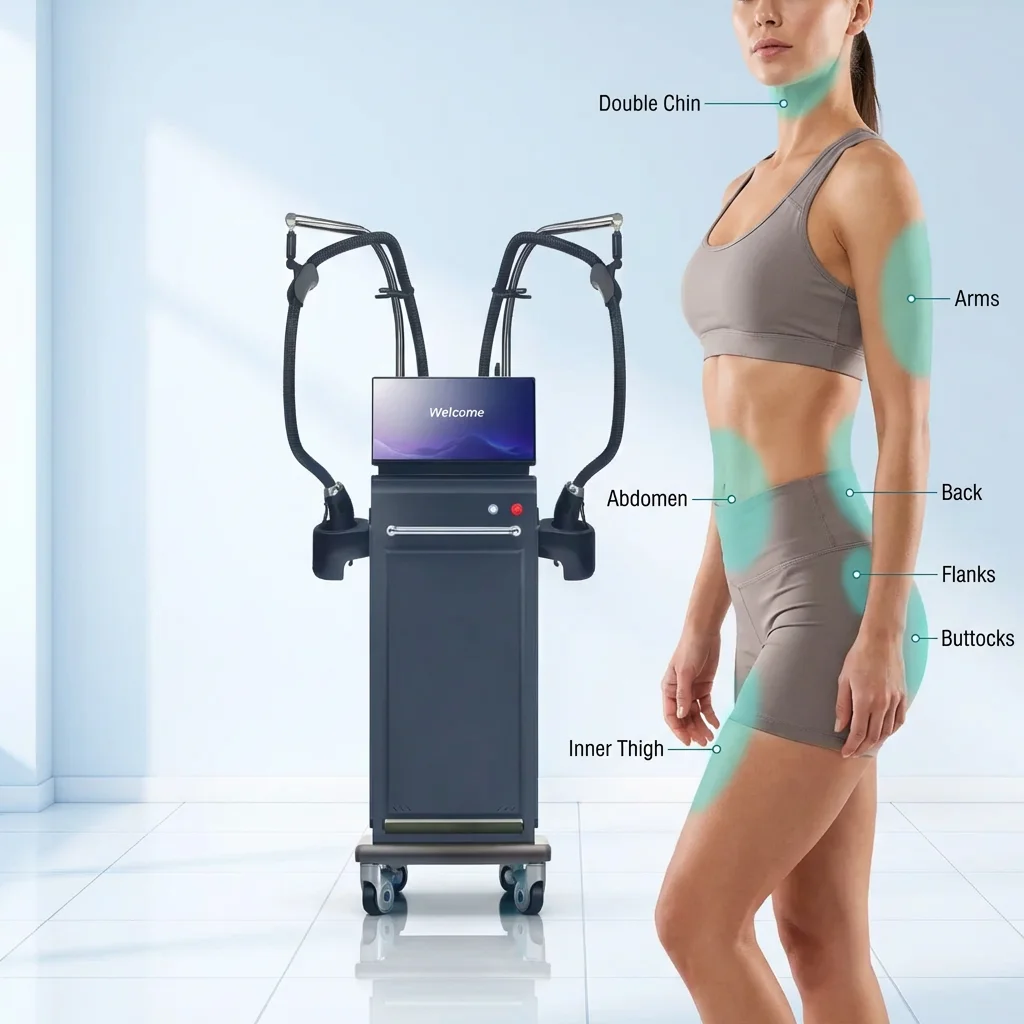
- Localized subcutaneous fat on the abdomen and flanks
- Thighs, including inner thigh laxity
- Buttocks - contour and dimpling appearance
- Upper arms - fat and skin tone
- Post-partum abdominal contour (with appropriate clearance)
- Skin laxity and cellulite appearance, where the tightening component of microwave therapy is the primary clinical objective
Clinical Protocol Considerations
Protocols are determined by the treating practitioner according to the device's instructions for use, the treatment area, and the individual patient's presentation. The clinically relevant variables are:
| Variable | Clinical consideration |
|---|---|
| Course length | A multi-session course, with the number of sessions set by area and clinical objective |
| Session interval | Spacing allows tissue response and clearance to progress between sessions |
| Energy dosage | Individualized to fat thickness, area, and patient tolerance |
| Area mapping | Larger areas may be segmented across sessions for uniformity of heating |
| Maintenance | Periodic maintenance sessions sustain contour and firmness |
| Documentation | Standardized photography and measurement at fixed intervals support clinical evaluation |
Combination logic. Microwave therapy addresses fat reduction and tightening in one modality. In practices offering a full body program, it is typically combined with:
- Cryolipolysis for fat-dominant, focal concerns (cold-induced adipocyte apoptosis)
- HIFEM platforms for muscle definition and toning
- RF or HIFU for facial and neck tightening, where microwave body applicators are not the intended tool
Microwave therapy is designed and applied as a body modality. Facial indications belong to facial energy platforms.
Clinical Comparison: Choosing the Right Modality
| Modality | Tissue target | Primary clinical objective | Downtime | Typical indication |
|---|---|---|---|---|
| Microwave therapy | Adipose tissue + dermal collagen (volumetric heating) | Fat reduction with skin tightening | None | Localized fat with laxity or dimpling |
| RF (radiofrequency) | Dermis and superficial tissue (resistive heating) | Tightening, texture | None | Laxity and skin quality |
| Cryolipolysis | Subcutaneous adipocytes (cold-induced apoptosis) | Fat reduction | None | Pinchable focal fat |
| HIFEM (Emsculpt-type) | Muscle (supramaximal contraction) | Muscle building and toning | None | Muscle definition |
| Laser lipolysis (1060 nm) | Adipose tissue (thermal) | Fat reduction | Minimal | Localized fat |
Clinical decision rule: cold for focal fat, microwave for fat plus laxity, HIFEM for muscle, RF/HIFU for facial tightening. Combining modalities by tissue target produces a more complete result than repeating one modality across all concerns.
Patient Selection and Safety
Suitable candidate profile
- Localized, pinchable subcutaneous fat
- Stable weight (contouring, not weight reduction)
- Realistic expectations and willingness to complete a course
- No contraindications on screening
Contraindications and precautions
Standard screening before treatment includes:
- Implanted electronic devices (for example, cardiac pacemakers)
- Metal implants in the treatment area
- Pregnancy
- Active infection, inflammation, or skin disease in the treatment area
- Conditions in which controlled tissue heating is inadvisable, as determined by the treating clinician
Expected transient effects
Temporary erythema and a warming sensation in the treated area are expected and resolve quickly. Patients should be counselled on these normal responses as part of informed consent.
Clinical Integration: FABE for Practitioners
| Feature | Clinical advantage | Clinical benefit |
|---|---|---|
| Volumetric deep heating | Treats fat and collagen compartments in one session | One protocol addresses fat and laxity together |
| Surface temperature management | Therapeutic depth with a controlled surface | Repeatable sessions with a defined safety margin |
| Multiple body applicators | Consistent heating across abdomen, thighs, buttocks, and arms | Broad treatment menu from a single platform |
| Stored parameters and touchscreen records | Reproducible protocols per patient | Consistency across operators; auditable records |
| ISO 13485 / MDSAP quality systems | Manufacturing under internationally recognized quality management | Clinics and distributors can operate and register with confidence |
Evidence, Training, and Compliance
- Mechanistic basis. The clinical rationale rests on established thermal biology: adipocyte sensitivity to controlled heat stress, and the contractile and remodeling response of collagen to thermal denaturation.
- Quality systems. ISO 13485 certified; MDSAP (Medical Device Single Audit Program) compliance.
- Market access. Product compliance aligned to CE, FDA, and TGA frameworks; documentation provided for registration.
- Manufacturer. Beijing JONTELASER Technology Co., Ltd. - designing and manufacturing medical aesthetic devices since 2004, exporting to more than 50 countries.
- Clinical responsibility. Treatment parameters, patient selection, and consent remain the responsibility of the qualified practitioner operating under local regulations. Training from the manufacturer supports safe protocol development.
Clinical FAQ
Q: What distinguishes microwave therapy clinically from radiofrequency? A: RF heats tissue resistively and typically acts at shallower depths, making it primarily a tightening modality. Microwave energy heats volumetrically and reaches subcutaneous fat, producing a measurable fat-reduction effect alongside tightening.
Q: Should I choose cryolipolysis or microwave therapy for an abdominal case? A: Assess the dominant concern. Focal, pinchable fat favours cryolipolysis; fat combined with laxity or dimpling favours microwave therapy, which addresses both compartments. Many protocols use both in the same body program.
Q: How soon should patients be assessed after a course? A: Because fat clearance and collagen remodeling are gradual, meaningful assessment typically occurs weeks to months after treatment. Standardized photography at fixed intervals is more informative than immediate evaluation.
Q: Are results durable? A: Treated fat cells are cleared and do not return; remaining adipocytes can still enlarge with weight gain. Maintenance sessions and stable lifestyle habits support long-term contour.
Q: Can microwave therapy be used on the face? A: Body applicators are designed for body areas. Facial tightening is better served by facial energy platforms such as HIFU or RF. Matching the modality to the anatomical region is basic clinical discipline.
Q: What are the most important screening questions? A: Implanted electronic devices, metal implants in the treatment area, pregnancy, and any active skin or systemic condition that makes controlled heating inadvisable.
Q: Is there any downtime? A: None. Patients resume normal activity immediately; transient erythema may occur and resolves quickly.
Q: How does microwave therapy fit a body programme commercially? A: It serves as the tightening and contouring component alongside fat reduction and muscle building - allowing practices to structure tiered programmes rather than selling single modalities.
Q: What training is required? A: Training is provided with the platform and covers indication selection, parameter setting, area handling, and safety screening. Local regulation determines who may perform the treatment.
Q: Does microwave therapy replace exercise or diet? A: No. It is a contouring intervention for localized concerns and complements, rather than substitutes for, lifestyle management.
Q: What documentation should accompany the device? A: Technical specifications, user manual, factory test reports, and regulatory documentation supporting market registration are provided with quotations and shipments.
Clinical Summary
Microwave therapy occupies a distinct position among non-invasive body modalities: it is the mainstream option that reduces localized fat and improves skin firmness in a single treatment, because its energy is delivered volumetrically to both the adipose and collagen compartments. For practices, the clinical value lies in correct patient selection, protocol individualization, honest expectation management, and combination with complementary modalities by tissue target.
Table of Contents
- Microwave Therapy for Body Contouring: Clinical Mechanism, Treatment Protocol & Safety Guide
- Clinical Mechanism: Volumetric Heating of Adipose and Collagen Tissue
- Clinical Indications
- Clinical Protocol Considerations
- Clinical Comparison: Choosing the Right Modality
- Patient Selection and Safety
- Clinical Integration: FABE for Practitioners
- Evidence, Training, and Compliance
- Clinical FAQ
- Clinical Summary