


 EN
EN



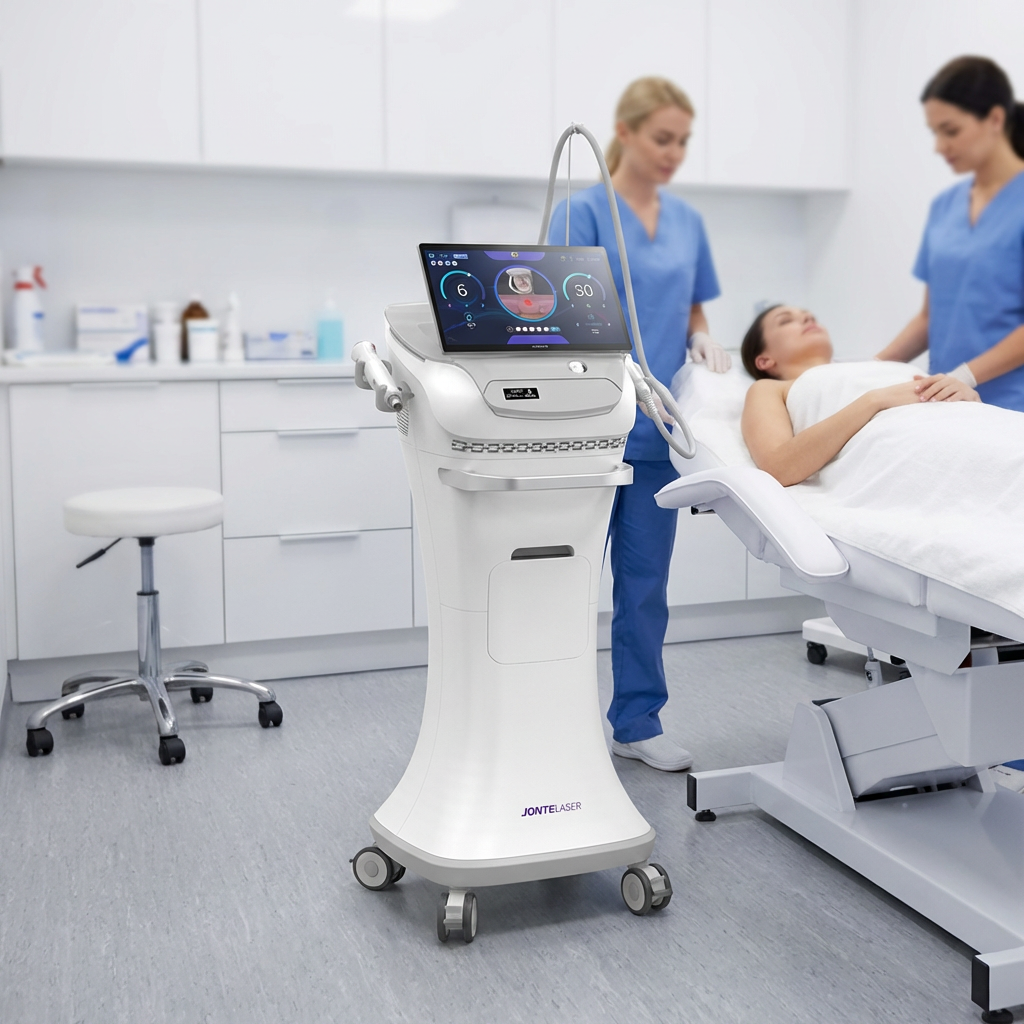
In the aesthetic device market, parameter comparisons are common.
Among them, device power (W) is often highlighted as a key selling point.
However, from a clinical perspective, the reality is quite different.
In many cases, the so-called “power competition” is driven more by marketing than by clinical necessity.
1. Main Unit Power Does Not Equal Needle Tip Power
When a device is labeled as 50W, this number usually refers to the maximum theoretical output of the main unit, not the actual energy delivered inside the skin.
In practice, the advertised 50W may represent:
-
The peak power of the main unit
-
The theoretical maximum output
-
The combined instantaneous power of multiple needles working in parallel
However, during real treatment:
-
The power delivered by a single needle reaching the tissue is significantly lower
-
The true clinical effect comes from the instantaneous thermal effect created at the needle tip
Therefore, the number shown on the specification sheet does not directly reflect the energy that actually acts on the dermal tissue.
2. Why Some Devices Promote Higher Power
In some cases, higher power values are used to compensate for limitations in system precision.
For example, if a device experiences:
-
unstable needle insertion
-
inconsistent needle tip energy release
-
significant energy attenuation through the needle structure
then increasing the overall power may appear to improve treatment results.
However, this approach focuses on compensating with power, rather than improving energy control and treatment precision.
3. Is 50W Really Necessary for Clinical Treatments?
For most aesthetic indications, the answer is no.
The primary therapeutic goal of gold RF microneedling is not tissue destruction, but:
-
controlled thermal coagulation within the dermis
-
stimulation of collagen remodeling
In clinical practice, physicians usually focus more on parameters such as:
-
pulse width
-
treatment frequency
-
needle penetration depth
These factors play a far greater role in determining treatment outcomes than simply increasing device power.
In many conventional aesthetic procedures, higher power does not necessarily lead to better results.
On the contrary, excessive power may increase:
-
the risk of epidermal overheating
-
treatment discomfort
-
recovery time
-
operator risk
4. Power Should Serve Clinical Needs, Not Marketing Numbers
From a technical standpoint, higher power output is certainly achievable.
However, increasing power should only be considered when it provides clear clinical value for specific indications.
The key objective of RF microneedling technology is not maximizing power figures, but ensuring:
-
precise energy delivery
-
controlled dermal heating
-
safe and consistent clinical outcomes
Ultimately, effective treatment depends on system design, energy control, and clinical logic, rather than simply pursuing larger numbers on a parameter sheet.
Unique&New TechnologySHOTWALKER
ShotWalker RF Microneedling delivers micro-injuries and controlled heat to promote dermal layer remodel-ing, targeting symptoms at the source. Promotion of new collagen and elastin leads to continuous improve-
ments over time.
ShotWalker treatments result in smooth and even skin appearance supported by the production of new col-agen and elastin.
The only handpiece on the market with dialed-in depth control.From 0.5mm to 7.0mm for face, neck, and body treatments
Dual frequencies of 1 MHz and 2 MHz enable coagulation at multiple locations and strengths