


 EN
EN



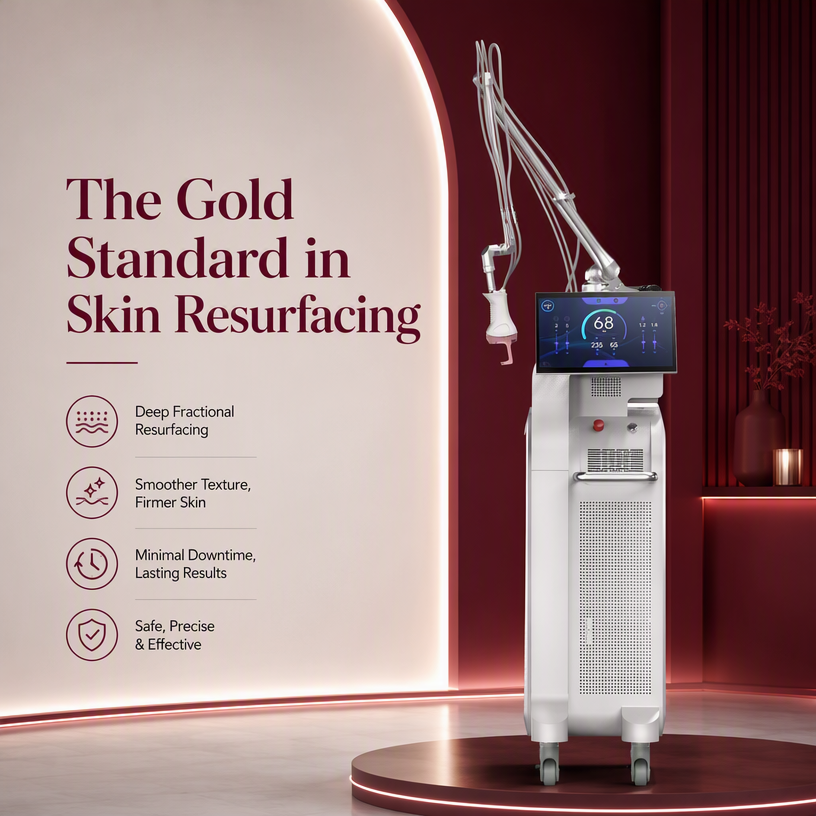
Stretch marks represent one of the most persistent skin concerns affecting millions of individuals worldwide, yet finding an effective treatment has historically proven challenging. The CO2 fractional laser has emerged as the gold standard solution, offering transformative results that older treatments simply cannot match. This advanced technology addresses stretch marks at their core by stimulating deep dermal remodeling and collagen regeneration, making it the preferred choice for both patients and dermatologists seeking optimal outcomes.

Understanding why the CO2 fractional laser stands above competing modalities requires examining both the science behind the technology and the clinical evidence supporting its superiority. Unlike surface-level treatments that provide temporary cosmetic improvement, the CO2 fractional laser penetrates deeply into damaged tissue, triggering the body's natural healing response. This mechanism enables lasting structural improvement rather than mere camouflage, explaining why professionals across the dermatological field consistently recommend it as the definitive stretch mark treatment.
How CO2 Fractional Laser Technology Works for Stretch Mark Correction
The Fractional Ablation Mechanism
The CO2 fractional laser operates by delivering precise columns of concentrated energy into the dermis layer where stretch marks originate. Rather than treating the entire skin surface uniformly, this fractional approach creates microscopic treatment zones surrounded by untreated tissue, enabling rapid healing and minimal downtime. The CO2 fractional laser's wavelength of 10,600 nanometers is uniquely absorbed by water in the skin, making it exceptionally effective at vaporizing damaged collagen fibers characteristic of stretch marks. This targeted ablation initiates a controlled inflammatory cascade that prompts fibroblasts to produce fresh, organized collagen throughout the treated area.
Collagen Remodeling and Skin Regeneration
The true power of the CO2 fractional laser lies in its ability to stimulate substantial collagen regeneration over weeks and months following treatment. Stretch marks develop when the dermis lacks sufficient collagen to maintain skin elasticity during periods of rapid expansion, resulting in visible scarring. By creating controlled micro-injuries, the CO2 fractional laser activates the body's innate repair mechanisms, leading to organized deposition of new collagen that structurally restores the skin. Multiple sessions of CO2 fractional laser treatment produce cumulative improvements, with patients typically observing progressive refinement as collagen remodeling continues for up to six months post-treatment.
Clinical Advantages and Superior Efficacy of CO2 Fractional Laser
Proven Results Across Stretch Mark Types
Clinical evidence demonstrates that the CO2 fractional laser delivers superior results compared to alternative modalities across all stretch mark classifications. Early-stage red or purple stretch marks respond exceptionally well, as the CO2 fractional laser reduces associated inflammation and initiates corrective collagen synthesis when marks are most amenable to intervention. Mature, white stretch marks present greater therapeutic challenge, yet the CO2 fractional laser still achieves meaningful improvement by restructuring collapsed dermal tissue. Independent studies document average improvement rates exceeding 70 percent with the CO2 fractional laser, substantially outperforming microdermabrasion, chemical peels, or topical treatments that rarely achieve improvements beyond 20 percent.
Long-Term Durability and Cost-Effectiveness
Beyond immediate cosmetic improvement, the CO2 fractional laser provides durable, long-lasting results that justify the investment required for treatment. The collagen regeneration stimulated by CO2 fractional laser therapy represents genuine structural restoration rather than temporary camouflage, meaning results persist indefinitely unless new stretch marks develop. Patients investing in CO2 fractional laser treatment avoid the endless cycle of purchasing ineffective topical products or undergoing repeated treatments with inferior modalities. When calculated on a per-result basis over time, the CO2 fractional laser proves markedly more cost-effective than alternative approaches, particularly for individuals with extensive stretch mark distribution.
Treatment Optimization and Patient Selection Criteria
Ideal Candidates and Pre-Treatment Assessment
Successful CO2 fractional laser outcomes depend significantly on appropriate patient selection and comprehensive pre-treatment evaluation. Patients with lighter skin tones typically experience superior results with the CO2 fractional laser, as darker pigmentation increases risk of post-inflammatory hyperpigmentation complications. Recent stretch marks respond more dramatically than longstanding marks, making early intervention with the CO2 fractional laser strategically advantageous. Candidates should possess realistic expectations, understanding that while the CO2 fractional laser delivers substantial improvement, complete erasure of all visible scarring may not occur, particularly with extensive or deeply etched marks.
Treatment Protocol and Recovery Considerations
Optimal outcomes with the CO2 fractional laser require carefully calibrated energy levels tailored to individual skin characteristics and stretch mark severity. Most practitioners recommend spacing multiple CO2 fractional laser sessions four to six weeks apart, allowing adequate time for collagen remodeling between treatments. Recovery from CO2 fractional laser therapy typically involves seven to ten days of redness and peeling, during which strict sun protection proves essential to prevent complications. Patients must adhere to comprehensive post-treatment skincare protocols and follow-up sun protection regimens to maximize results and minimize adverse effects from their CO2 fractional laser sessions.
FAQ
How many CO2 fractional laser sessions are typically required for visible stretch mark improvement?
Most patients achieve noticeable improvement after three to five CO2 fractional laser sessions spaced four to six weeks apart, though the exact number depends on stretch mark characteristics, skin tone, and individual healing response. Early-stage marks may require fewer sessions, while mature white stretch marks often necessitate additional CO2 fractional laser treatments to achieve optimal results. Progressive collagen remodeling continues for months after the final session, meaning improvements may continue even after completing the initial treatment series.
Is the CO2 fractional laser suitable for all skin types?
While the CO2 fractional laser delivers excellent results for lighter skin tones, darker skin types require modified treatment parameters to minimize post-inflammatory hyperpigmentation risk. Experienced practitioners can safely deliver CO2 fractional laser treatment across diverse skin types by adjusting energy levels, pulse duration, and interval spacing accordingly. Comprehensive consultation with a qualified provider ensures the CO2 fractional laser parameters are optimized for individual skin characteristics before beginning treatment.
What distinguishes CO2 fractional laser from other laser technologies for stretch marks?
The CO2 fractional laser's superior efficacy stems from its optimal wavelength absorption by dermal water and its ability to create controlled ablative zones that trigger robust collagen regeneration. Non-ablative laser systems penetrate less deeply and generate weaker biological responses, while CO2 fractional laser technology combines penetration depth with powerful thermal effects that activate significant restructuring. The fractional approach of the CO2 fractional laser balances aggressive treatment efficacy with acceptable downtime and recovery, making it the preferred choice among dermatologists seeking optimal stretch mark correction.