


 EN



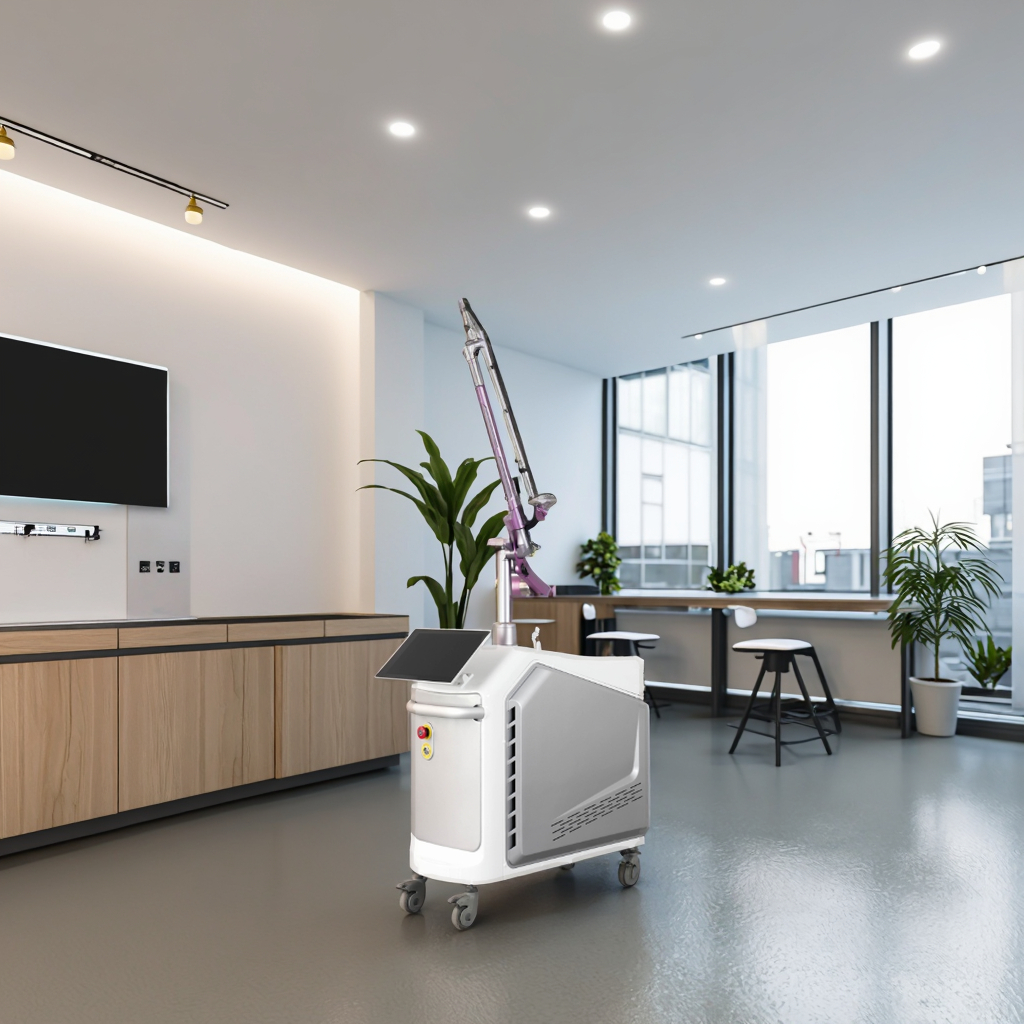
Melasma and dark spots represent two of the most stubborn pigmentation challenges in aesthetic medicine today. Traditional approaches like topical creams and chemical peels often deliver inconsistent results, leaving patients frustrated with slow progress or incomplete clearance. The picosecond laser machine has emerged as a revolutionary solution that addresses the root cause of these pigmentation disorders at the cellular level, offering clinically proven effectiveness that distinguishes it from earlier laser technologies.

The picosecond laser machine operates on fundamentally different physics than nanosecond lasers that dominated the market for decades. By delivering energy in picosecond pulses—one trillionth of a second—this technology creates a photoacoustic effect that shatters pigment particles into microscopic fragments without generating excessive heat. This precision mechanism makes the picosecond laser machine particularly effective for melasma because it targets melanin with unprecedented control while minimizing thermal damage to surrounding tissue, a critical advantage when treating the delicate facial areas most prone to stubborn pigmentation.
Understanding Why Picosecond Laser Machine Technology Excels Against Pigmentation
Superior Pigment Fragmentation and Clearance
The picosecond laser machine achieves effectiveness through a unique mechanism of action that distinguishes it from conventional thermal laser systems. When the picosecond laser machine pulse strikes melanin particles, the rapid energy delivery creates mechanical stress that fragments pigment into particles small enough for the body's lymphatic system to eliminate naturally. This process is vastly more efficient than the coagulation-based approach of older nanosecond lasers, which rely on heat to break down pigment and often result in incomplete clearance, post-inflammatory hyperpigmentation, or paradoxical darkening—a serious complication in melasma cases.
Clinical studies demonstrate that the picosecond laser machine requires fewer treatment sessions to achieve significant pigmentation reduction compared to nanosecond alternatives. Patients with melasma respond particularly well because the picosecond laser machine can target both epidermal and dermal melanin without the collateral thermal injury that triggers the very inflammatory cascade capable of worsening melasma. This makes the picosecond laser machine especially valuable in treating the deeper, more resistant melasma patterns that fail to respond to surface-level interventions.
Reduced Risk of Adverse Effects
One reason the picosecond laser machine is highly effective for melasma lies in its safety profile. Traditional nanosecond lasers generate substantial heat that can trigger post-inflammatory hyperpigmentation, particularly in darker skin types where melanin-producing cells remain hyperactive. The picosecond laser machine minimizes this risk by relying on mechanical photoacoustic energy rather than thermal destruction, allowing practitioners to deliver aggressive pigment targeting without the secondary darkening that previously limited treatment efficacy. This reduced complication rate means the picosecond laser machine can be used more confidently in patients with melasma, a condition where iatrogenic darkening represents a genuine treatment failure.
Clinical Evidence Supporting Picosecond Laser Machine Effectiveness for Dark Spots and Melasma
Rapid Pigment Clearance and Durability
Real-world clinical outcomes consistently validate why the picosecond laser machine delivers superior results for melasma and dark spots. Treatment protocols using the picosecond laser machine typically show meaningful pigmentation reduction after two to four sessions, whereas older nanosecond lasers often required six to eight sessions or more. The picosecond laser machine's ability to fragment pigment more completely means fewer residual particles remain to regenerate hyperpigmentation, translating to more durable results and higher patient satisfaction rates. Additionally, the picosecond laser machine stimulates collagen remodeling as a secondary benefit, improving overall skin texture and appearance beyond pigmentation correction alone.
The picosecond laser machine demonstrates particular effectiveness in treating resistant melasma cases that have failed previous interventions. Dermatologists report that the picosecond laser machine achieves clearance rates exceeding 75% in most melasma patients after a standard course of treatment, with many achieving near-complete pigmentation removal. This stands in stark contrast to chemical peels or topical treatments, which typically plateau at 40–60% improvement. The picosecond laser machine's mechanical action provides a decisive advantage because it doesn't depend on heat-based destruction, eliminating the inflammatory feedback loop that perpetuates melasma in sensitive individuals.
Versatility Across Pigmentation Types
The effectiveness of the picosecond laser machine extends beyond melasma to encompass a wide spectrum of dark spots, including solar lentigines, post-inflammatory hyperpigmentation, and café-au-lait macules. This versatility reflects the picosecond laser machine's ability to adjust wavelength, pulse duration, and energy levels to match specific pigment characteristics and skin depth. Practitioners using the picosecond laser machine can tailor treatment parameters to epidermal versus dermal pigmentation, a level of precision that older technologies could not achieve. This adaptability makes the picosecond laser machine an ideal single-platform solution for clinics managing diverse pigmentation presentations, maximizing return on investment while ensuring consistent patient outcomes.
Practical Integration of Picosecond Laser Machine in Treatment Protocols
Treatment Planning and Patient Selection
Maximizing picosecond laser machine effectiveness requires thoughtful patient selection and realistic expectation-setting. The picosecond laser machine works optimally in patients with clear baseline hyperpigmentation visible on examination, but outcomes depend significantly on skin type, lesion depth, and patient commitment to sun protection. Practitioners using the picosecond laser machine should educate patients that melasma represents a chronic, recurrence-prone condition where UV exposure and hormonal factors can reactivate pigment production even after successful clearance. The picosecond laser machine cannot modify these underlying triggers, so post-treatment prophylaxis with broad-spectrum sunscreen and potentially oral photoprotective agents remains essential to prevent relapse.
Pre-treatment assessment using the picosecond laser machine involves determining whether pigmentation is predominantly epidermal, dermal, or mixed, as this distinction guides laser parameter selection. Melasma frequently presents with dermal component that demands deeper penetration and extended treatment intervals, whereas a simple dark spot may respond rapidly. The picosecond laser machine's adjustable architecture accommodates this nuance, but practitioners must resist the temptation to over-treat in hopes of accelerating clearance, as excessive picosecond laser machine exposure increases adverse effect risk. Standardized treatment protocols for the picosecond laser machine typically involve monthly intervals with reassessment after each session, allowing cumulative effects to manifest safely.
Recovery and Patient Care Optimization
The picosecond laser machine offers a significant recovery advantage over ablative and aggressive thermal lasers. Patients typically experience minimal downtime following picosecond laser machine treatment, with erythema and mild edema resolving within hours to one day. This rapid recovery profile makes the picosecond laser machine attractive for patients with melasma who cannot tolerate extended healing periods, and it permits more frequent treatment sessions if clinically indicated. However, the picosecond laser machine does produce temporary surface darkening called the 'Tyndall effect' in some patients as pigment particles migrate, and practitioners must counsel patients that this represents a normal, transient phase of the healing process rather than treatment failure. Adherence to strict sun avoidance and consistent photoprotection after picosecond laser machine sessions directly influences final outcome quality and recurrence prevention.
FAQ
How many sessions of picosecond laser machine treatment are typically needed for melasma?
Most melasma patients require four to six sessions spaced four to six weeks apart when using the picosecond laser machine. However, individual variation is substantial—some patients with superficial pigmentation clear in three sessions, while deeper dermal melasma may require eight to ten sessions. The picosecond laser machine allows progressive evaluation after each session, enabling practitioners to adjust parameters and extend treatment intervals as improvement accumulates. Patients should anticipate that significant clearance becomes visible after two to three sessions, with progressive refinement continuing through the full treatment course.
Is the picosecond laser machine safe for all skin types?
The picosecond laser machine is considerably safer across diverse skin types compared to older nanosecond lasers because its non-thermal, photoacoustic mechanism minimizes the post-inflammatory hyperpigmentation risk that disproportionately affects darker skin. However, practitioners must still exercise caution and adjust picosecond laser machine settings appropriately for skin phototype, as any laser carries inherent risks. The picosecond laser machine's ability to reduce complications in darker skin types represents one of its most significant clinical advantages, particularly for melasma, which predominantly affects individuals with Fitzpatrick skin types III to V.
Can the picosecond laser machine permanently remove melasma and dark spots?
The picosecond laser machine can achieve near-complete pigmentation clearance, but melasma represents a chronic condition prone to recurrence with UV exposure and hormonal fluctuation. Results from the picosecond laser machine are durable when patients maintain vigilant sun protection and photoprotection measures, with many patients enjoying several years of clear skin before subtle repigmentation occurs. The picosecond laser machine does not modify the underlying genetic predisposition or hormonal sensitivity that drives melasma, so maintenance sessions may eventually become necessary. Dark spots unrelated to melasma often show more permanent clearance after picosecond laser machine treatment.