


 EN
EN



Evaluating laser bar quality in diode laser hair removal machines represents a critical technical assessment that directly impacts treatment efficacy, safety, and long-term equipment performance. The laser bar serves as the fundamental light-emitting component within the diode system, converting electrical energy into coherent light at specific wavelengths optimized for hair follicle destruction. Understanding how to properly assess laser bar quality enables practitioners, clinic owners, and equipment purchasers to make informed decisions that ensure consistent treatment outcomes and maximize return on investment.
The quality assessment process involves multiple technical parameters, manufacturing standards, and performance metrics that collectively determine the reliability and effectiveness of the laser bar within the complete hair removal system. Professional evaluation requires systematic examination of optical characteristics, thermal management capabilities, electrical specifications, and long-term stability factors. This comprehensive approach ensures that the selected diode laser system delivers consistent performance across thousands of treatment sessions while maintaining safety standards and achieving desired clinical outcomes for diverse patient populations and hair types.
Understanding Laser Bar Construction and Components
Semiconductor Material Quality Assessment
The semiconductor substrate forms the foundation of laser bar quality, with gallium arsenide (GaAs) and indium gallium arsenide (InGaAs) representing the primary materials used in hair removal applications. High-quality substrates exhibit uniform crystal structure, minimal defect density, and consistent doping profiles that enable reliable photon emission across the active region. Evaluation involves examining the material purity specifications, crystal orientation accuracy, and surface finish quality that directly influence the laser's optical and thermal performance characteristics.
Professional assessment includes reviewing the epitaxial layer structure, which consists of multiple thin films deposited onto the substrate to create the active region, cladding layers, and contact regions. The thickness uniformity, composition accuracy, and interface quality between these layers determine the laser's wavelength stability, threshold current, and overall efficiency. Quality laser bars feature precisely controlled layer thicknesses with variations typically less than 5% across the active area, ensuring consistent optical output and wavelength characteristics.
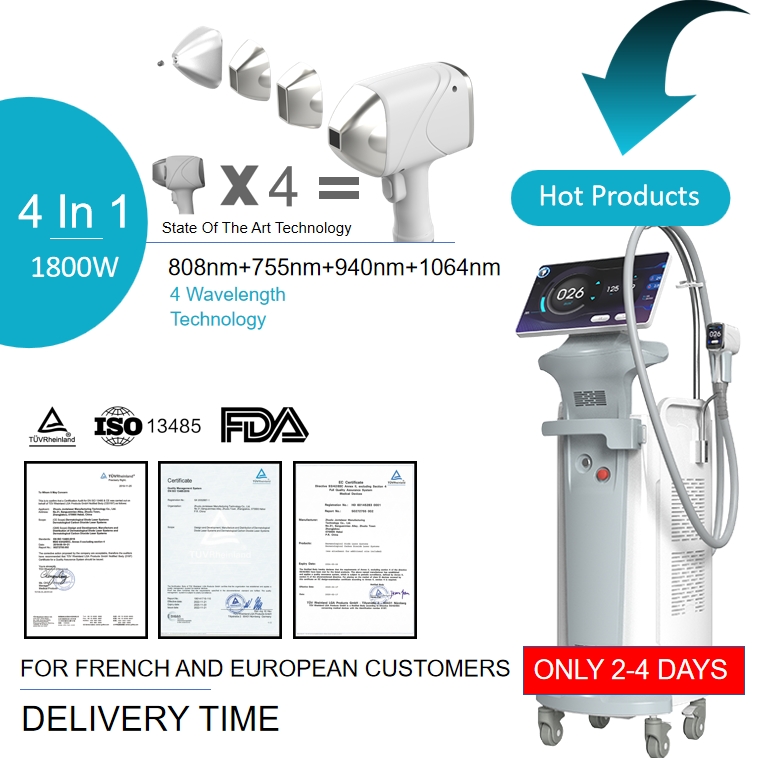
The active region design significantly impacts laser bar quality, particularly the quantum well structure that determines the emission wavelength and efficiency. High-quality implementations feature optimized well widths, barrier heights, and strain engineering that enhance carrier confinement and reduce non-radiative recombination. Assessment involves verifying the number of quantum wells, their composition profiles, and the resulting gain characteristics that enable efficient light generation at the target wavelengths of 755nm, 808nm, 940nm, or 1064nm commonly used in hair removal applications.
Optical Cavity Design and Facet Quality
The optical cavity configuration plays a crucial role in determining laser bar quality through its impact on beam characteristics, threshold current, and output power stability. High-quality designs feature optimized cavity lengths that balance output power requirements with thermal management considerations while maintaining single-mode operation or controlled multimode characteristics. Evaluation involves assessing the cavity geometry, including ridge width, etch depth, and sidewall angle quality that influence the transverse mode profile and beam divergence characteristics.
Facet coating quality represents a critical factor in laser bar quality assessment, as these coatings control reflectivity, protect against environmental degradation, and influence long-term reliability. The front facet typically features anti-reflection coatings with reflectivity below 1%, while the rear facet incorporates high-reflection coatings exceeding 95% reflectivity. Professional evaluation requires examining coating uniformity, adhesion quality, and environmental stability through accelerated aging tests and optical microscopy analysis.
Beam quality metrics provide quantitative measures of optical performance, including beam parameter product (BPP), M-squared values, and far-field divergence characteristics. Superior laser bar quality produces near-diffraction-limited beam profiles with M-squared values approaching unity in the fast axis and controlled multimode operation in the slow axis. Assessment involves measuring the beam caustic using beam profiling equipment and calculating the resulting beam quality factors that determine focusing capability and treatment spot uniformity.
Electrical and Thermal Performance Evaluation
Current-Voltage Characteristics Analysis
The current-voltage (I-V) relationship provides fundamental insights into laser bar quality through measurements of threshold current, series resistance, and ideality factor. High-quality laser bars exhibit low threshold currents typically below 1.5 amperes per millimeter of cavity width, indicating efficient carrier injection and minimal non-radiative losses. Professional assessment involves plotting the I-V curve under controlled temperature conditions and extracting key parameters that indicate the quality of the semiconductor junction and contact resistance.
Series resistance measurements reveal the quality of electrical contacts and current distribution uniformity across the laser bar width. Superior laser bar quality demonstrates series resistance values below 10 milliohms for single emitter devices, with parallel resistance exceeding 1000 ohms indicating minimal leakage current. Evaluation requires precision electrical measurements using four-point probe techniques to separate contact resistance from bulk semiconductor resistance and identify potential quality issues related to metallization or wire bonding processes.
Temperature dependence of electrical characteristics provides critical information about thermal stability and long-term reliability expectations. Quality laser bars maintain stable threshold currents with temperature coefficients below 3 mA/°C and exhibit minimal changes in series resistance across the operating temperature range. Assessment involves measuring electrical parameters at multiple temperature points from 15°C to 65°C and analyzing the resulting temperature coefficients that indicate thermal management effectiveness and material quality.
Thermal Resistance and Heat Dissipation Assessment
Thermal resistance measurement represents a critical aspect of laser bar quality evaluation, as excessive thermal resistance leads to reduced efficiency, wavelength drift, and premature failure. High-quality laser bars feature thermal resistance values below 1.5 K/W for single-bar configurations, achieved through optimized heat sink design, efficient thermal interface materials, and minimized thermal path resistance. Professional assessment involves thermal impedance measurements using electrical heating and temperature sensing techniques to characterize both steady-state and transient thermal behavior.
Heat spreading effectiveness within the laser bar substrate and mounting assembly significantly influences overall thermal performance and reliability. Quality designs incorporate copper or diamond heat spreaders, optimized solder attachment processes, and thermal interface materials with thermal conductivity exceeding 200 W/m-K. Evaluation involves thermal imaging analysis during operation to identify hot spots, temperature gradients, and thermal uniformity across the active region that impact laser bar quality and longevity.
Thermal cycling stability testing provides insights into the mechanical integrity and thermal expansion compatibility of the complete laser bar assembly. Superior laser bar quality withstands thousands of thermal cycles between operating and ambient temperatures without degradation in optical or electrical performance. Assessment protocols involve accelerated thermal cycling tests combined with continuous monitoring of key performance parameters to identify potential failure modes and establish reliability projections for clinical applications.
Optical Output Characteristics and Stability
Power Output and Wavelength Accuracy
Optical power output measurement forms the cornerstone of laser bar quality assessment, requiring precise calibration and standardized measurement conditions to ensure accurate results. High-quality laser bars deliver rated output power with less than 5% deviation from specification while maintaining linear power scaling with drive current above threshold. Professional evaluation involves power measurements using calibrated thermal detectors or integrating sphere systems under controlled environmental conditions including temperature, humidity, and cooling water temperature stability.
Wavelength accuracy and stability directly impact hair removal efficacy, as different wavelengths exhibit varying absorption characteristics in melanin and hemoglobin. Quality laser bars maintain center wavelength within ±2 nm of specification across the operating power range and temperature variations. Assessment requires spectral analysis using optical spectrum analyzers with sub-nanometer resolution to characterize the emission spectrum, identify any unwanted secondary peaks, and verify compliance with safety standards for specific wavelength ranges.
Spectral width and mode structure analysis reveals important characteristics about laser bar quality including coherence properties and potential for unwanted wavelength components. Superior designs exhibit controlled spectral width typically below 5 nm FWHM for hair removal applications while maintaining stable mode structure across the power operating range. Evaluation involves high-resolution spectroscopy to characterize the detailed spectral content and identify any instabilities or mode competition that could affect treatment consistency.
Long-term Stability and Degradation Analysis
Long-term power degradation characteristics provide crucial insights into laser bar quality and expected service life under clinical operating conditions. High-quality laser bars demonstrate power degradation rates below 10% after 10,000 hours of operation at rated power levels, with initial burn-in periods showing rapid stabilization within the first 100 hours. Professional assessment involves accelerated aging tests at elevated temperatures and current densities combined with extrapolation models to predict long-term performance under normal operating conditions.
Catastrophic optical damage (COD) threshold testing reveals the maximum power handling capability and safety margins inherent in the laser bar quality design. Superior laser bars withstand power densities exceeding 10 MW/cm² at the front facet without immediate failure, providing substantial safety margins for clinical applications. Evaluation involves gradual power ramping while monitoring for sudden power drops or spectral changes that indicate the onset of facet damage or other failure mechanisms.
Gradual degradation mechanisms including dark line defect formation, facet erosion, and contact degradation provide insights into fundamental laser bar quality factors. Professional assessment involves periodic characterization of electrical and optical parameters combined with microscopic analysis to identify degradation patterns and root causes. Quality laser bars exhibit minimal dark line defect propagation and maintain stable contact resistance throughout their operational lifetime, indicating superior material quality and manufacturing processes.
Manufacturing Quality and Compliance Standards
Production Process Control and Documentation
Manufacturing quality documentation provides essential insights into laser bar quality through detailed process control records, statistical process control data, and quality management system compliance. High-quality manufacturers maintain comprehensive records of epitaxial growth parameters, wafer processing conditions, testing results, and traceability throughout the production chain. Professional evaluation involves reviewing quality management certifications including ISO 9001, ISO 13485 for medical devices, and specific laser safety standards compliance documentation.
Wafer-level testing and yield statistics reveal important indicators of laser bar quality consistency and manufacturing process stability. Superior manufacturers achieve high yields typically exceeding 85% for devices meeting all specifications while maintaining tight statistical distributions of key parameters. Assessment involves reviewing process capability studies, control charts, and correlation analysis between process parameters and device performance to identify potential quality risks and process optimization opportunities.
Batch-to-batch consistency represents a critical aspect of laser bar quality for clinical applications requiring predictable performance across multiple device replacements. Quality manufacturers demonstrate coefficient of variation below 10% for key parameters including threshold current, optical power, and wavelength across production batches. Evaluation involves statistical analysis of historical production data and incoming inspection results to assess manufacturing process control effectiveness and supplier quality management systems.
Regulatory Compliance and Safety Standards
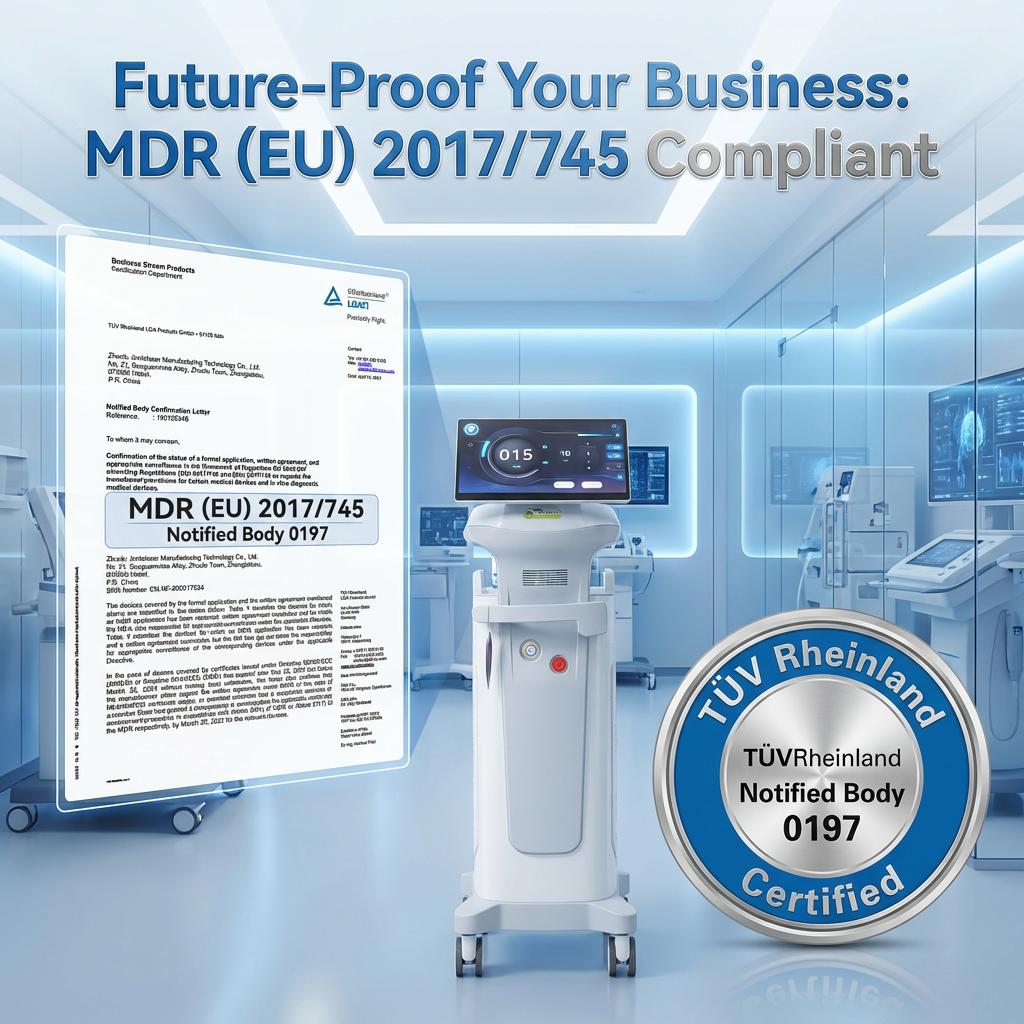
Regulatory compliance documentation provides critical validation of laser bar quality for medical device applications, including FDA 510(k) clearance, CE marking under Medical Device Regulation (MDR), and Health Canada medical device licensing. Professional assessment involves verifying that laser components meet applicable safety standards including IEC 60825 for laser safety, IEC 60601 for medical electrical equipment, and specific electromagnetic compatibility requirements. Quality laser bars incorporate appropriate safety features and maintain compliance throughout their operational lifetime.
Electromagnetic compatibility (EMC) testing results indicate laser bar quality through measurements of radiated emissions, conducted emissions, and immunity to electromagnetic interference. High-quality designs demonstrate compliance with Class B emission limits for medical devices while maintaining stable operation in the presence of typical clinical electromagnetic environments. Assessment involves reviewing EMC test reports and ensuring proper shielding, filtering, and grounding implementation in the laser bar assembly and control electronics.
Safety interlock systems and fail-safe design features represent essential elements of laser bar quality for hair removal applications involving direct patient exposure. Quality systems incorporate multiple independent safety mechanisms including thermal shutdown, optical power monitoring, and emergency stop capabilities that prevent hazardous operation under fault conditions. Evaluation involves functional testing of all safety systems and reviewing failure mode and effects analysis (FMEA) documentation to ensure comprehensive risk mitigation.
FAQ
What are the most critical parameters to measure when evaluating laser bar quality?
The most critical parameters include threshold current below 1.5 A/mm, optical power accuracy within 5% of specification, wavelength stability within ±2 nm, thermal resistance below 1.5 K/W, and power degradation rates below 10% after 10,000 hours. These parameters directly correlate with treatment efficacy, safety, and long-term reliability in clinical applications.
How can I verify the wavelength accuracy of a laser bar in a diode hair removal system?
Wavelength accuracy verification requires an optical spectrum analyzer with sub-nanometer resolution to measure the center wavelength and spectral width under operating conditions. Professional verification should be performed at multiple power levels and temperatures to ensure stability within the ±2 nm specification range required for effective hair removal treatment.
What thermal management factors most significantly impact laser bar quality and longevity?
Key thermal management factors include thermal resistance below 1.5 K/W, effective heat spreading through copper or diamond substrates, optimized thermal interface materials with conductivity exceeding 200 W/m-K, and proper cooling system design maintaining junction temperatures below 60°C. These factors directly influence efficiency, wavelength stability, and operational lifetime.
How do I assess the long-term reliability of laser bars before making a purchase decision?
Reliability assessment requires reviewing accelerated aging test data, manufacturer quality documentation including statistical process control records, regulatory compliance certificates, and historical performance data from similar installations. Request detailed specifications for power degradation rates, mean time between failures (MTBF), and warranty terms that reflect confidence in laser bar quality and manufacturing consistency.
Table of Contents
- Understanding Laser Bar Construction and Components
- Electrical and Thermal Performance Evaluation
- Optical Output Characteristics and Stability
- Manufacturing Quality and Compliance Standards
-
FAQ
- What are the most critical parameters to measure when evaluating laser bar quality?
- How can I verify the wavelength accuracy of a laser bar in a diode hair removal system?
- What thermal management factors most significantly impact laser bar quality and longevity?
- How do I assess the long-term reliability of laser bars before making a purchase decision?